

Cut the Red Tape: Germany's New Fast-Track Recognition Law Explained
Autor: Match Doctors
9. Juli 2026
Overview: From November 2026, the new Acceleration Act for the Recognition of Foreign Professional Qualifications in Healthcare will come into force. A draft regulation has now also been published that sets out important details about the new professional licensing examination. Here is what could change for doctors from third countries — and what it means for your path to approbation in Germany.
What's happending?
The shortage of doctors in Germany is not a new issue, but the numbers behind it are alarming. While the number of medical graduates across OECD countries rose by an average of 75% between 2000 and 2023, Germany lagged far behind: between 2013 and 2023, the country produced only about 12.2 graduates per 100,000 residents, compared with an OECD average of 14.3 in 2023.
At the same time, Germany's healthcare system faces another structural challenge: according to the 2024 activity report of the German Medical Association (Bundesärztekammer), 23% of all practising doctors are over 60 years old and will be leaving the workforce in the coming years.
Policymakers are debating various solutions: from expanding the number of placements of medical degree programmes to digitalisation measures aimed at relieving the burden on medical staff, and the introduction of Physician Assistants.
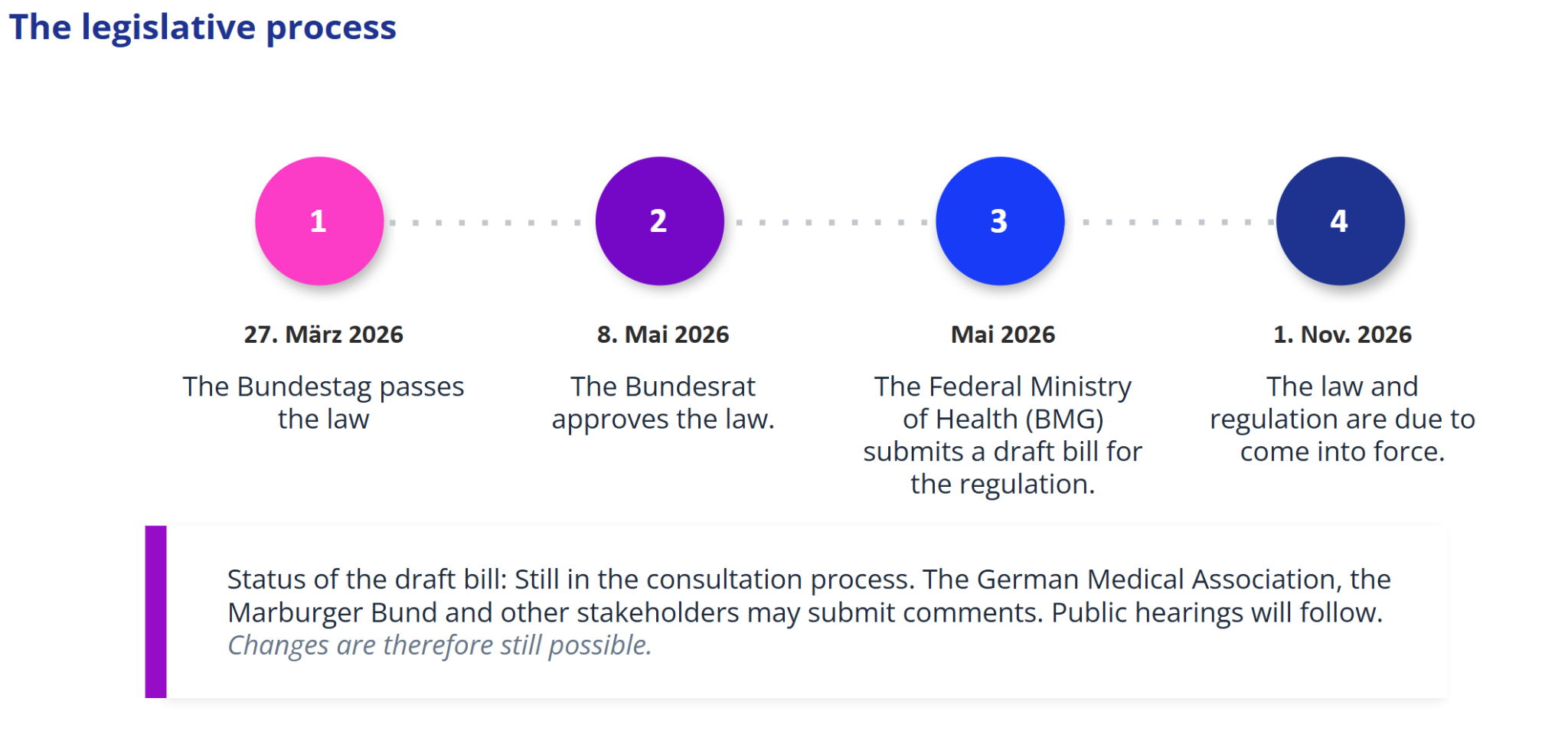
Now, however, the federal government has taken another concrete step: on 27 March 2026, the parliament (Bundestag) passed the Act to Accelerate the Recognition Procedures for Foreign Professional Qualifications in Healthcare Professions, and then the federal council (Bundesrat) gave its approval on 8 May 2026. It will come into force on 1 November 2026. In addition, the Federal Ministry of Health has now published a draft regulation that operationalises the new rules and is set to amend the German Medical Licensing Regulations (Approbationsordnung für Ärzte, ÄApprO).
Match Doctors explains what this means for you.
What exactly is changing?
The knowledge examination (Kenntnissprüfung) becomes the "professional licensing examination" and gets a new format. Until now, doctors from third countries, i.e. countries outside the EU and EEA, could also go through a lengthy document-based equivalence assessment (“dokumentenbasierte Gleichwertigkeitsprüfung”, also called “Gutachtenverfahren”). This process is time-consuming, bureaucratic, and prone to delays. Under the new law, this equivalence assessment will only be used selectively; the existing Kenntnisprüfung (knowledge examination) is set to become the default pathway and receives a new name: the professional licensing examination (Berufszulassungsprüfung).
But it is not just the name that is supposed to be changing; the format itself is being redesigned (more on that below). According to estimates by the Federal Ministry of Health, the change is expected to generate annual savings of nearly €16 million and significantly reduce the months-long waiting times applicants currently face.
Language proficiency can be assessed earlier: Federal states will now have the option to request proof of language skills before the assessment of professional qualifications. This creates more predictability and can accelerate the overall process.
Goodbye red tape: From now on, all necessary documents can be submitted electronically. Certifications will only be required in cases of “justified doubts as to the authenticity” of documents. Documents in English no longer need to be translated, and public authorities are permitted to use quality-assured machine translations. This significantly simplifies the application process and facilitates the exchange of data between the relevant authorities.
Open-ended work permits in exceptional cases: Until now, work permits were limited to a maximum of two years, which can be a major source of uncertainty, given the sometimes extremely long waiting times for examination appointments. From November 2026, open-ended work permits can be granted in exceptional cases, providing a legally secure bridge until full approbation is obtained.
Nationwide standardisation of requirements: Anyone familiar with the approbation process knows the problem: what is required in Bavaria may not be sufficient in Brandenburg. The draft regulation provides for nationwide uniform documentation standards for medical applications. A long overdue step.
Introduction of an examination registry: The federal government has recommended that the states establish a registry for candidates taking the professional licensing examination in order to counter so-called "exam tourism." A new statutory duty accompanies this: federal states must inform one another when a candidate has failed the examination on their third attempt.
What is changing about the examination itself?
This is the part that affects you most directly as a candidate. The draft regulation describes a significantly revised examination format.
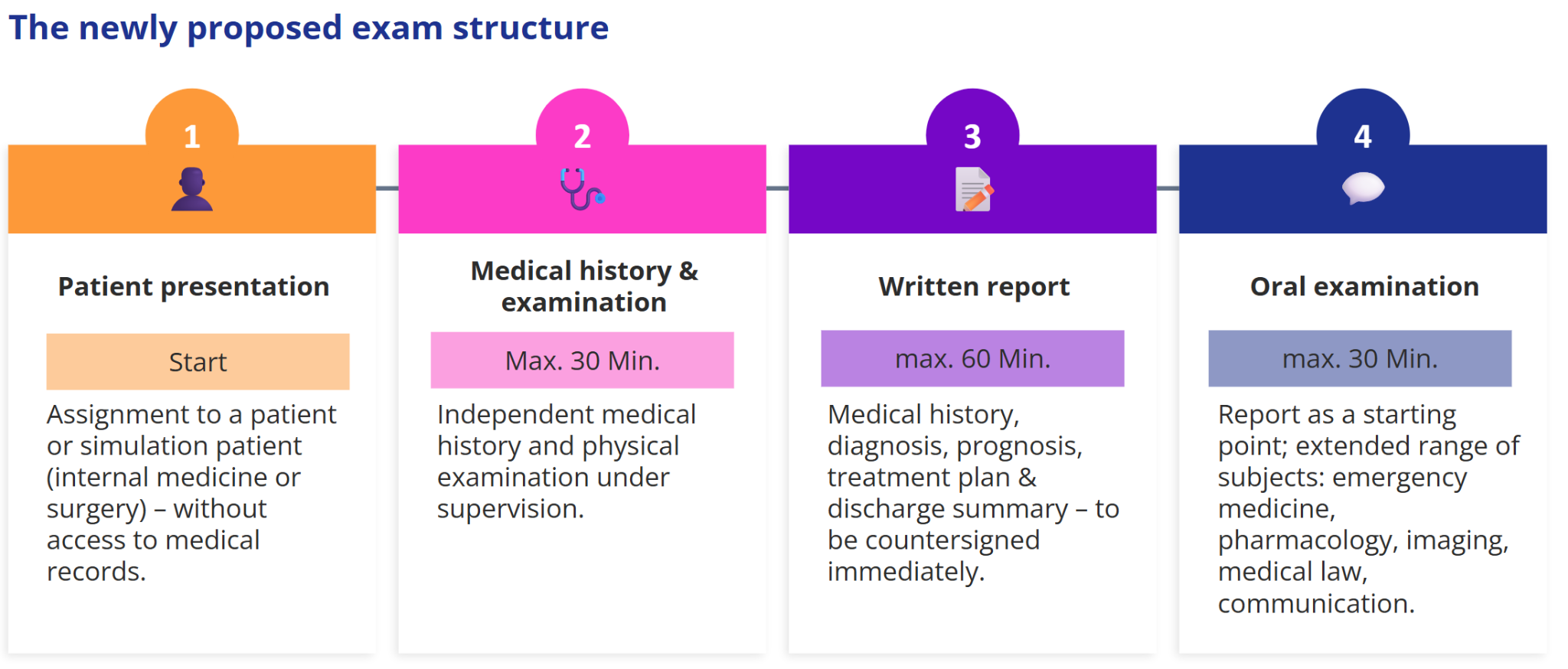
New: Structured preparation phase on the day of the examination. The most important new element is a mandatory patient-based preparation phase that precedes the actual oral examination. Here's how it works:
- 1.You will be assigned a patient or simulated patient (internal medicine or surgery) — without prior access to their file.
- 2.You take the patient´s history and examine them for a maximum of 30 minutes under supervision.
- 3.You then receive relevant parts of the patient file and write a structured report: maximum 60 minutes. This report, which must include history, diagnosis, prognosis, treatment plan, and epicrisis, is countersigned immediately by an examiner and serves as both the starting point and subject of the subsequent oral examination.
The examination thus becomes a three-part process (preparation → report → discussion) that holistically assesses clinical reasoning, documentation and communication skills.
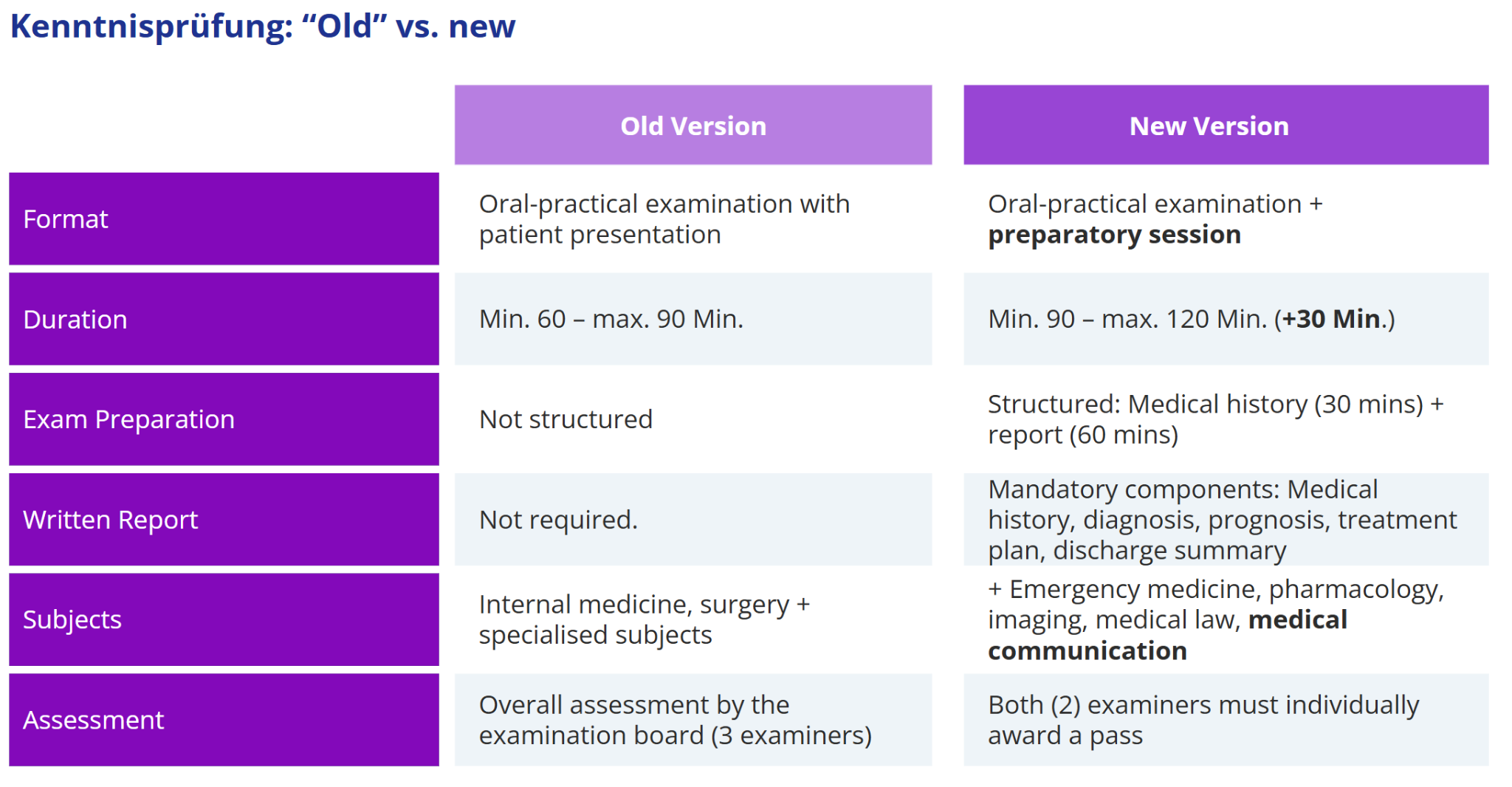
Longer examination duration. The total duration is set to increase from the current 60–90 minutes to 90–120 minutes per candidate.
Expanded subject areas. The current knowledge examination focuses primarily on internal medicine and surgery, plus individually determined subjects. The new range of subjects laid down by the draft ordinance is significantly broader: in addition to internal medicine and surgery, it now clearly states that the exam must include emergency medicine, clinical pharmacology/pharmacotherapy, imaging techniques and radiation protection, the legal framework governing the practice of medicine, as well as medical consultation skills and professional communication.
Important: Both examiners must individually confirm a pass. Previously, it was sufficient for the examination panel, consisting of three examiners, to reach an overall assessment; going forward, the new two proposed examiners must independently award a pass.
What does this mean for you as a doctor?
The conclusion is clear: the process is set to become faster and more predictable. Once the law has been implemented uniformly across all federal states, it should become noticeably easier for doctors from third countries to enter the profession.
Less bureaucracy also means more time and energy for what really matters – preparing for the exam. After all, the academic requirements remain high. Patient safety and medical quality standards remain the top priority and are likely to be further strengthened by the new procedure. The new format tests not only specialist knowledge but also clinical reasoning under time pressure, written documentation and communication skills across a broader range of subjects. Anyone preparing for the exam must be familiar with the new format and practice specifically for it.
Match Doctors' verdict
The law and the draft regulation send a strong signal: policymakers are acknowledging just how vital international doctors are to the German healthcare system and are acting on it.
That said, the draft regulation is not yet final. It is currently working its way through the legislative process and bodies such as the German Medical Association (Bundesärztekammer) and the Marburger Bund have the opportunity to submit statements. Changes are therefore still possible. We at Match Doctors will keep you informed as soon as the regulation is formally adopted.
And perhaps most importantly, laws come into force, but it takes time for them to be put into practice across all 16 federal states. We will be closely monitoring how quickly implementation progresses and will continue advocating to ensure that our course participants receive their approbation without unnecessary delays.
Ready for your next career step in Germany? Sign up with Match Doctors — and let's plan the path to your approbation together.